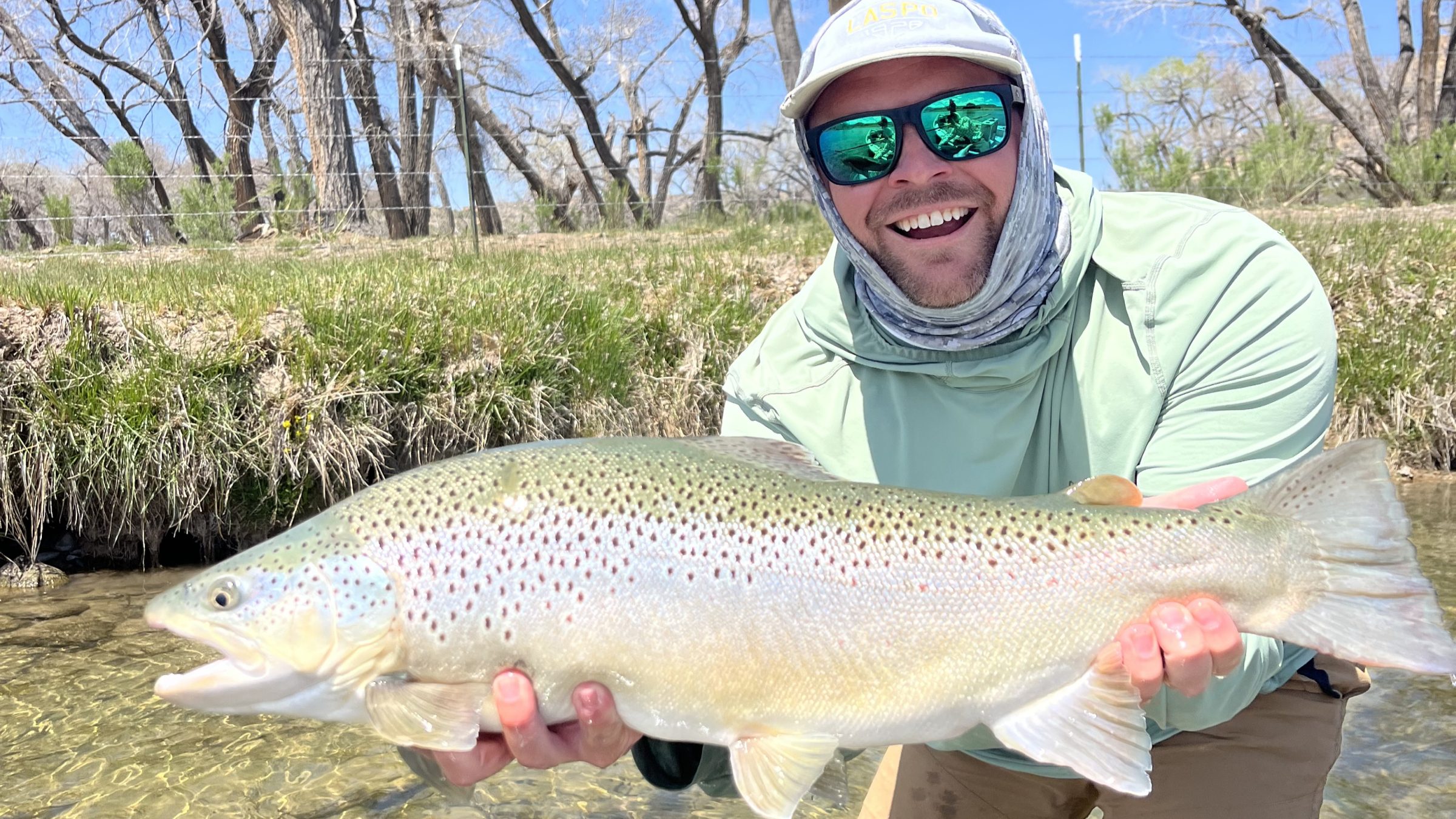
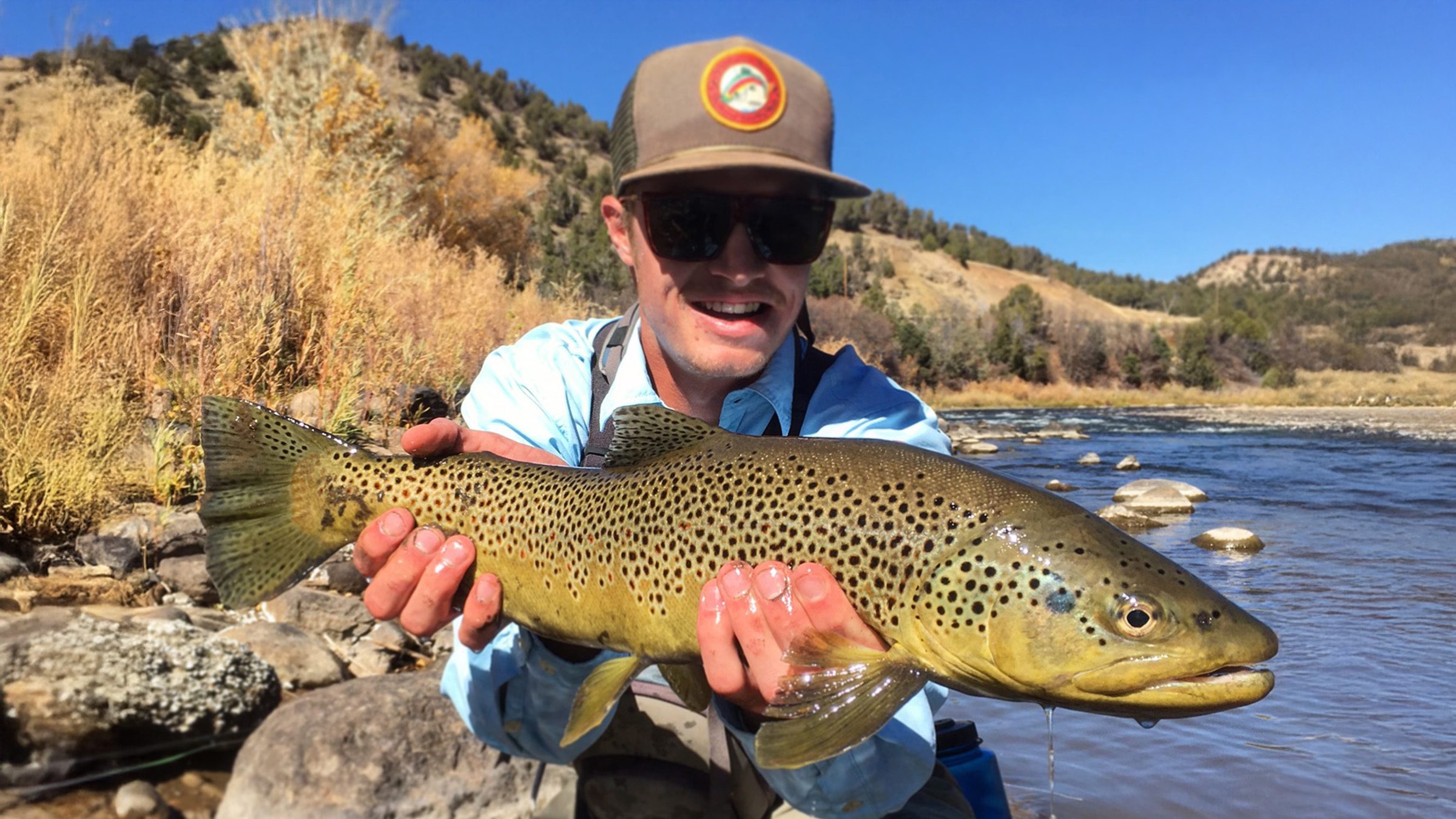
Winter Fishing The San Juan
Common Flies
Annelids/Midge Larvae
The San Juan is loaded with midge larvae in various sizes and . Some favorite patterns to imitate these larvae during the winter months are annelids. Annelids in sizes 14-18 are my favorites for the winter months. Because the water is off color, it pays to have a fly that stands out. There are many different colors to throw and red, orange, cream with brown ribbing, and maroon are great options. An all year classic than continues to put fish in the net during the winter are midge larvae patterns like the big mac. I like the dark brown and black size 20-24 during the winter months. The midge hatch slows down so fish really key into the larvae stage of the bug life cycle.Eggs
Like many classic tailwaters, an egg pattern can be a major contributor on successful days in the winter. The browns are spawning from October to as late as late December and early January and fish are keyed into the influx of eggs in the water. The San Juan also has many rainbows that will be off their ticker and dumping eggs year round. Fish are used to seeing eggs in the river and this is a great source of protein for them. There seem to be a few egg colors that flat out put in more work than others on the San Juan. My favorite are light yellow, chartreuse, bright orange, and a creamy white/yellow. On sunny days, chartreuse green and light yellow can be great options. On cloudy days, cranberry and neon orange seem to be more productive. Don’t be afraid to go big. There have been some great days of fishing with glo bugs as big as your thumb nail as your attractor fly. More often than not, it seems that smaller eggs really get the job done on hard days. Finding a sand bar, or a hard drop off can be great places to fish eggs. Fish can see their profile well as they roll off of drops and naturally eggs come out of shallower water. Fish will stack up under these shelves. Make sure to not fish the Redd that the fish are actively spawning on however. Oftentimes, throwing an egg on your rig is a good idea simply to bring attention to the other fly. Whether that’s an annelid, buckskin worm, san juan worm, midge, etc… There have been days where putting an egg pattern on changes how often that bobber is shooting down. Fishing eggs isn’t for everybody (quite frankly I don’t know why), but if you’re ever having a slow day during the winter months the egg can be worth exploring.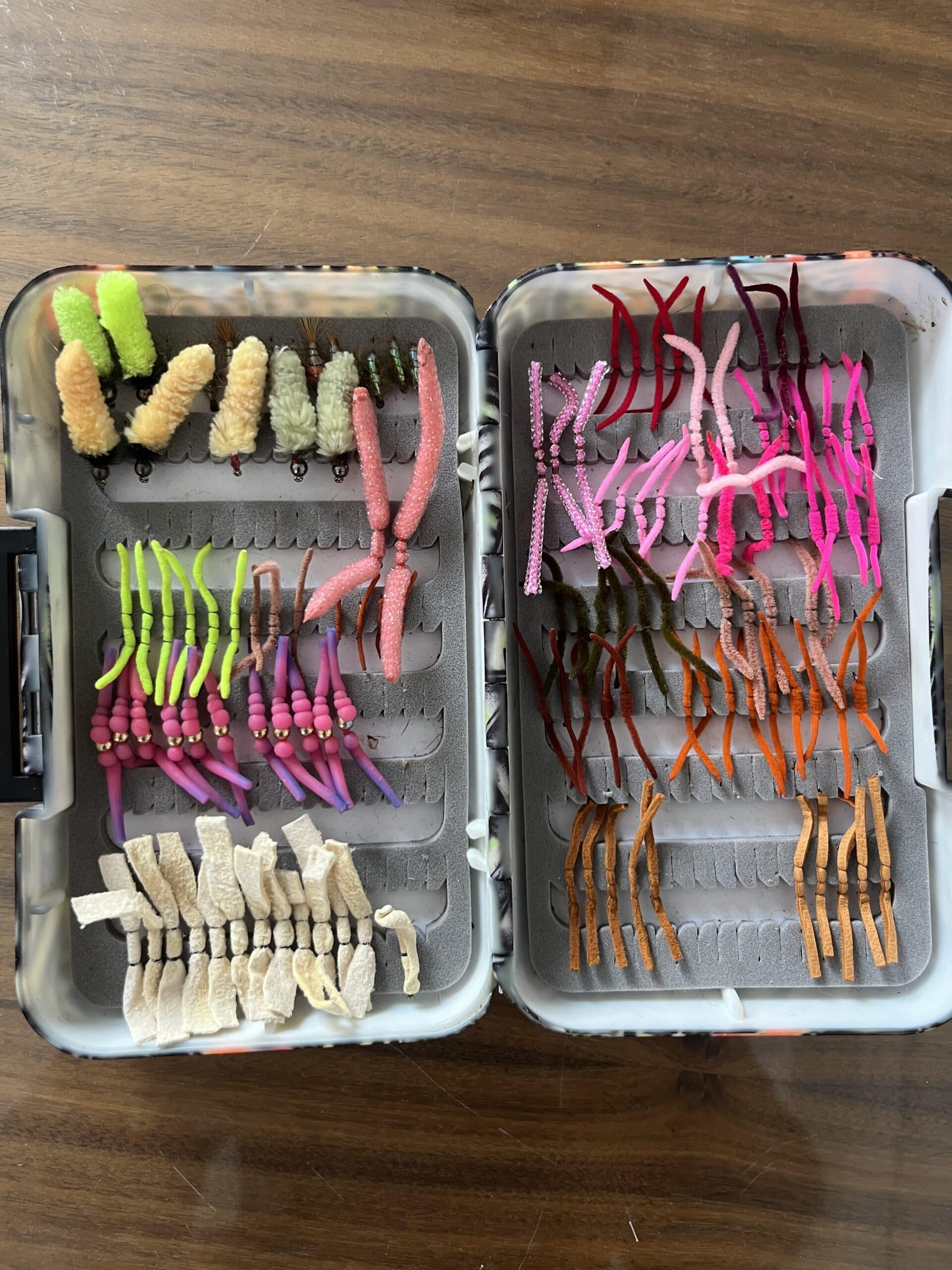
Different san juan worms and mop flies
Worms
The San Juan Worm did not earn the name it has for nothing. This is a go to fly during the winter months. Try experimenting with different sizes however. Some days they will eat a worm that’s an inch to two inches long and other days they want a pattern that’s a quarter to an eighth of an inch long. Popular colors are neon pink, burnt orange, wine, or cream. I like fishing these patterns close to the bottom of the river so don’t slack on your depth or weight. Don’t overlook this pattern. It’s been around a long time for a reason! The buckskin worm can really hunt during the winter months. Many aquatic worms are actually flat on one side so the buckskin worm imitates this nicely. Similar to the san juan worm, play with the size you’re throwing. I like throwing lighter brown colors and also will hug the bottom of the river when throwing these. Larger buckskin worms can imitate leeches as well which is a great option on the San JuanMop Flies
The fish on the San Juan will gorge themselves on floating moss and lake sludge. This floating debris will carry many midges and aquatic worms and it’s a good bang for their buck when they eat moss. As anglers, we can imitate this by using different color mop flies. Chartreuse, cream, and light pink are some favorite colors down there. This also makes a great attractor fly if they aren’t out right eating it. There are also many crane fly larvae in the san juan so a cream mop fly fits the bill nicely. I like the larger sizes of the mop fly so anywhere from a 12-16. If someone is really feeling like putting the hammer on some fish that are new to the river, a bright orange mop get the job done lower down river.Baetis Patterns
As the winter months progress we start to see larger size baetis coming off. Typically mid winter, the baetis are not hatching enough for the fish to totally key into them. As we approach late Feb. and March we will start to see larger quantities of these bugs appear. Light olive, grey, and brown seem to be the ticket with these bug imitations. I like to fish in the upper water column when throwing baetis patterns. I will throw very light weights and shorter rigs to stay in the preferred water column. The “twitch” can be very effective. Depending on what speed water is being fished, try to put small twitches or long slow drags on your rig. Oftentimes, this will elicit a sharp, fast paced bobber down. I like a thin profile on my flies when targeting fish eating baetis. The fluff baetis or a lightly wrapped foam back are my favorites. Anglers should find shallow water with riffles and focus their time there. Another great place to focus their time is “at the end of the funnel” of a run. Picture the river at the tail out of a run where the banks start to pinch together making a funnel. Fish will stack in that funnel and eat emergers.Leeches
A personal favorite of mine for winter fishing the San Juan is a leech pattern. There is such a variety of ways to fish them and no shortage of different colors and patterns. As mentioned earlier, fish in this section of river eat a lot of moss and sludge. The leech can be a perfect imitation of this. I like pine squirrel leeches, mayer’s leech, buggers, etc.. There are so many options to choose from. I love a dark green in larger size leeches and black, gray, brown and white in medium to small sizes. Adding a hot spot head to this pattern is the difference between a great day and a slow day, so hit the water with some options. I like chartreuse green and bright orange for bead heads. I like light orange or pink for hot thread heads. These are patterns you can twitch, swing, dredge. All depends on what you’re trying to imitate. Although it may seem like too much, I have dead drifted size 8 bunny leeches and had some fantastic days on the San Juan. Don’t be scared to go big if you are not having the day you thought you should be.Winter Fishing The San Juan Rig Combos
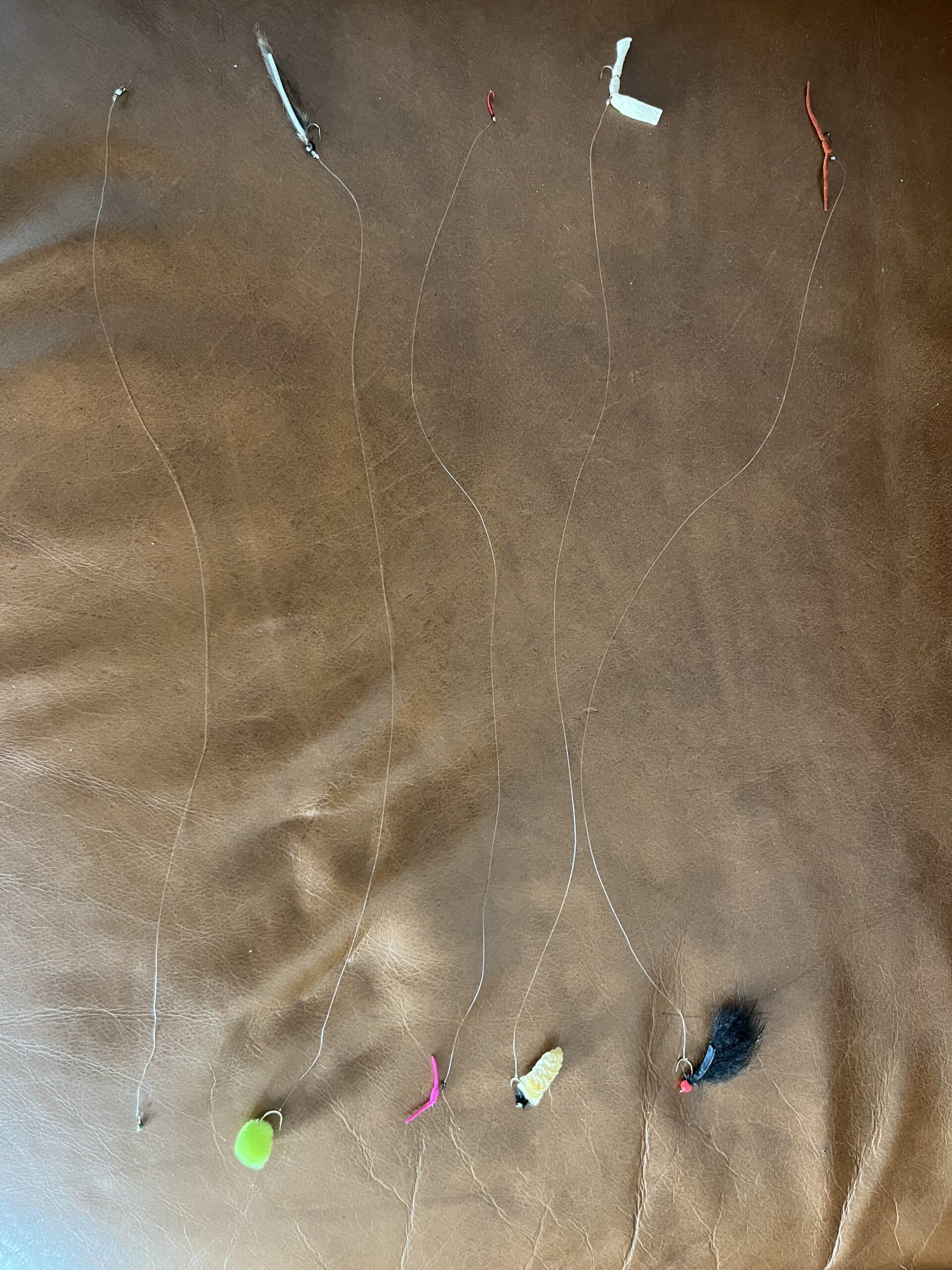
Example of some common rigs